Oklahoma House Bill 3263 to Designate the Yellow Morel as the State Mushroom

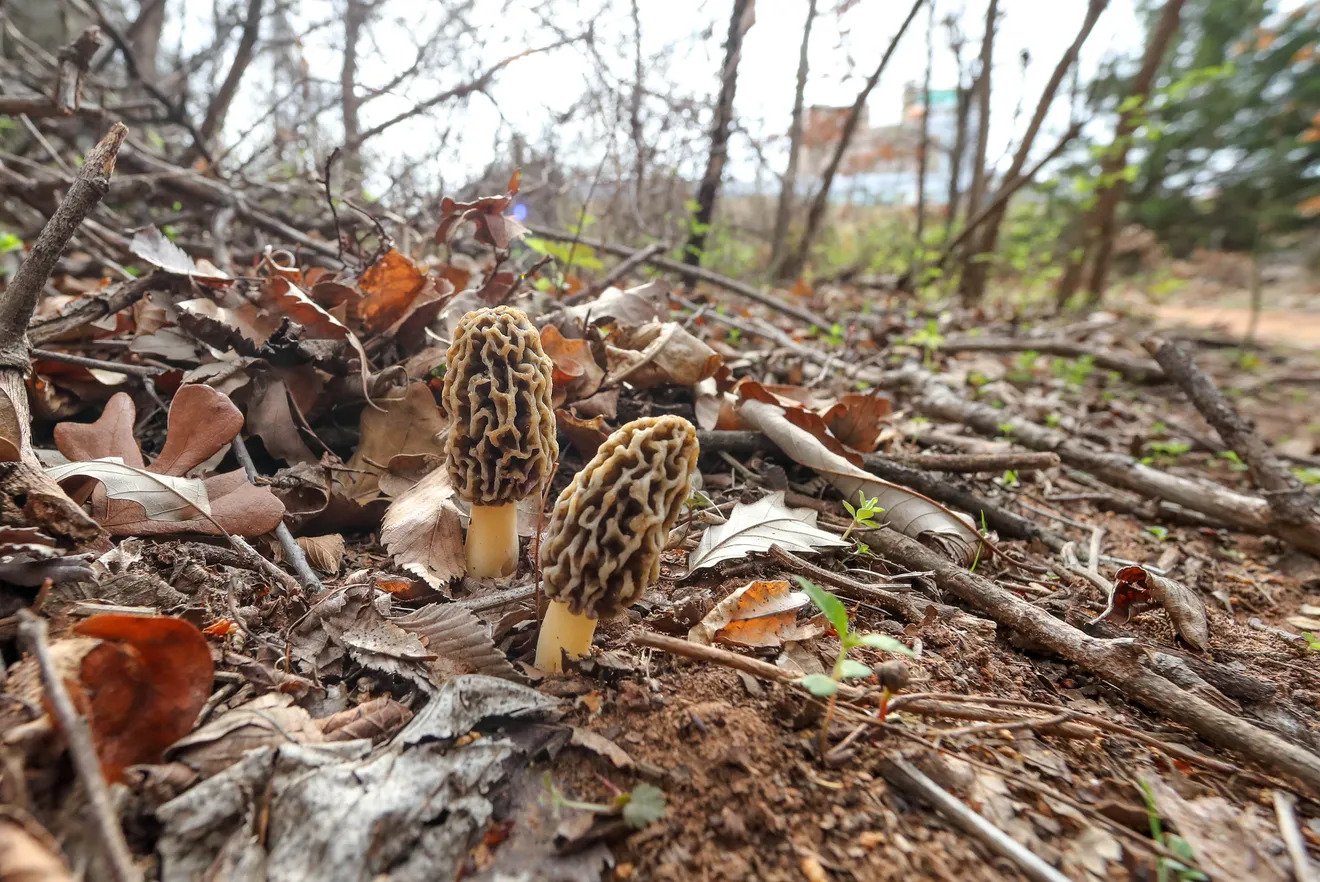
Oklahoma may soon officially recognize one of its most beloved wild foods. House Bill 3263 proposes designating the morel mushroom (Morchella americana) as the official state mushroom of Oklahoma. For thousands of Oklahomans who eagerly await spring morel season each year, this legislation reflects something that has been building steadily: growing statewide enthusiasm for fungi, foraging, and a deeper appreciation of our forests.
Each spring, more residents head into hardwood bottoms searching for honeycomb caps emerging from the leaf litter. Online communities continue to expand. Identification classes are filling faster than ever. What was once considered a niche seasonal hobby has evolved into a widely celebrated outdoor tradition for many Oklahomans.
Recognizing the Morel Mushroom as an Oklahoma State Symbol
House Bill 3263 would amend the Oklahoma statute to designate the morel mushroom (Morchella americana) as the official state mushroom and add it to the list of recognized state symbols. Authored by John George (R-Newalla), the bill recognizes the cultural and seasonal importance of morel hunting across Oklahoma. Representative George, a morel hunter himself, introduced the legislation to celebrate the thousands of Oklahomans who participate in this spring tradition each year. While symbolic legislation may appear ceremonial, it carries a meaningful long-term impact. Official state designations influence educational materials, tourism initiatives, conservation awareness, and how future generations understand what defines Oklahoma’s natural identity.
Timeline Since Introduction
Since its introduction, HB 3263 has steadily advanced through the Oklahoma legislative process. The bill is authored by Representative John George in the Oklahoma House of Representatives and carried in the Senate by Senator Warren Hamilton. Together, the legislation proposes officially designating the morel mushroom as Oklahoma’s state mushroom. According to the official legislative record, HB 3263 has progressed through the following steps:
January 14, 2026 – HB 3263 was formally introduced in the Oklahoma House of Representatives. This is when the bill text was officially filed and entered into the legislative system.
February 2, 2026 – The bill received its First Reading in the House, formally presenting it before the chamber.
February 3, 2026 – The bill was referred to the House Tourism Committee and the House Commerce and Economic Development Oversight Committee for review and consideration. Committee referral is a critical step, as it determines which lawmakers evaluate the proposal before it can advance further in the legislative process.
February 12, 2026 – The House Tourism Committee voted “Do Pass,” advancing the bill forward.
February 26, 2026 – The House Commerce and Economic Development Oversight Committee also voted “Do Pass,” sending the bill forward for consideration by the full Oklahoma House of Representatives.
March 11, 2026 – A floor amendment was introduced adding a new Section 1 and designating the act as the “David Beyer Act of 2026.” The amendment retained the remaining sections of the bill while renumbering them accordingly. Legislative research analysis of the amendment was prepared by Douglas Amos, House Research Staff, who confirmed the amendment does not change the fiscal impact of the measure.
March 16, 2026 – The Oklahoma House of Representatives passed HB 3263 by a vote of 78–11. This strong bipartisan vote demonstrates broad legislative support for recognizing the morel mushroom as Oklahoma’s official state mushroom. Readers interested in seeing how individual representatives voted can view the full vote record here:
https://www.oklegislature.gov/cf/2025-26%20SUPPORT%20DOCUMENTS/votes/House/HB3263_VOTES.HTM#RCS0005
The bill also lists Senator Mary Boren as a co-author, signaling growing bipartisan support as the legislation prepares to move to the Oklahoma Senate. Support from both Senator Boren and Senator Hamilton provides important momentum as the bill enters the next phase of the legislative process.
With approval from both House committees and a successful vote on the House floor, HB 3263 will now move to the Oklahoma Senate, where it will be assigned to a committee and continue through the legislative review process before a potential Senate vote.
What Happens Next?
With HB 3263 now successfully passing the Oklahoma House of Representatives, the bill has been referred for engrossment. Engrossment is an administrative step where legislative staff prepares the official House-approved version of the bill, incorporating any adopted amendments before transmitting it to the Oklahoma Senate.
Once the engrossed version is finalized, the bill will officially move to the Oklahoma Senate for the next phase of the legislative process.
The typical next steps include:
The bill is received in the Oklahoma Senate and given its First Reading.
The Senate President Pro Tempore assigns the bill to one or more Senate committees for review.
If the assigned Senate committee(s) vote “Do Pass,” the bill advances to the Senate floor.
The full Senate will then debate and vote on the bill.
If the Senate passes the bill without changes, it will be sent directly to the Governor for signature. If the Senate adopts amendments, the bill would return to the House for consideration of those changes.
The bill already has important support in the Senate. Senator Warren Hamilton is serving as the Senate author of the legislation, and Senator Mary Boren has also signed on as a co-author. Their support provides meaningful bipartisan momentum as HB 3263 begins its journey through the Senate.
With a strong 78–11 vote in the House and growing support in both chambers, HB 3263 now moves forward to the Oklahoma Senate, bringing the state one step closer to officially recognizing the morel mushroom as Oklahoma’s state mushroom.
What Can You Do to Help?
Momentum is building, but community involvement remains essential. Our petition to designate the morel as Oklahoma’s official state mushroom has already gathered over 200 signatures, demonstrating clear public enthusiasm for this recognition. If you have not yet signed, now is the time. You can add your name and share the petition here:
https://www.change.org/p/designate-the-morel-mushroom-as-oklahoma-s-official-state-mushroom
Petitions help show lawmakers that this issue has real grassroots support. When legislators see measurable engagement from their constituents, it reinforces that the bill matters to voters. Beyond signing the petition, we strongly recommend reaching out directly to your elected leaders. Contact your State Representative and State Senator and respectfully encourage them to support House Bill 3263 as it moves through committee and floor votes.
When contacting your legislators, you can:
Express your support for HB 3263
Share why the morel is meaningful to you and your family
Emphasize the educational, cultural, and tourism value of recognizing a state mushroom
Ask them to vote in favor of the bill and help ensure it advances
Personal emails and phone calls carry significant weight in the legislative process. Lawmakers track constituent outreach, and even a small number of direct messages can influence awareness and prioritization. This is an opportunity for Oklahoma’s mushroom community to show that our enthusiasm is organized, informed, and engaged. Together, we can help ensure the morel receives the recognition it deserves.
Building on Mushroom Policy Success: The Momentum of SB 447
The progress we are seeing with HB 3263 did not happen overnight. Last year, I had the opportunity to work directly with Senator Mary Boren (Norman) to introduce Senate Bill 447, legislation designed to allow for the responsible foraging of edible plants, nuts, and fungi on certain state-managed lands. SB 447 clarified long-standing ambiguities around access and formally recognized that foraging, when done ethically and sustainably, is a legitimate outdoor activity. The bill ultimately passed, marking a meaningful shift in how Oklahoma approaches wild food resources.
For many in the foraging community, SB 447 represented a turning point. It demonstrated that lawmakers were willing to engage with the science, ecology, and cultural value of mushrooms and wild foods. It also showed that education and respectful advocacy can lead to practical policy change. Now, with HB 3263 advancing through committee, we are building on that foundation.
First, we worked to secure responsible access through SB 447. Now, we are pursuing formal cultural recognition through HB 3263. The trajectory is clear: mushrooms are increasingly being acknowledged not as fringe interests, but as valued components of Oklahoma’s outdoor heritage. Momentum is growing — and it is grounded in years of education, relationship-building, and collaboration with elected leaders who recognize the importance of this work.
States That Already Recognize an Official Mushroom
If HB 3263 becomes law, Oklahoma would join several states that have already designated official mushrooms:
California — California Golden Chanterelle (Cantharellus californicus)
Colorado — Emperor Mushroom (Agaricus julius)
Illinois — Giant Puffball (Calvatia gigantea)
Minnesota — Morel (Morchella esculenta)
Utah — Porcini (Boletus edulis)
Vermont — Bear’s Head Tooth (Hericium americanum)
Across the country, states are recognizing fungi as an important part of their ecological and cultural identity. Oklahoma’s morel traditions are equally deserving of that recognition.

Free Morel Mushroom Foraging Guide
To further support beginner and experienced foragers alike, I wrote Oklahoma’s most up-to-date foraging guide specifically tailored to our state. This guide was created to:
Help beginners safely identify edible species
Explain look-alike risks and safety precautions
Outline ethical harvesting practices
Provide habitat and seasonal information specific to Oklahoma
Click here for our Free Morel Mushroom Foraging Guide
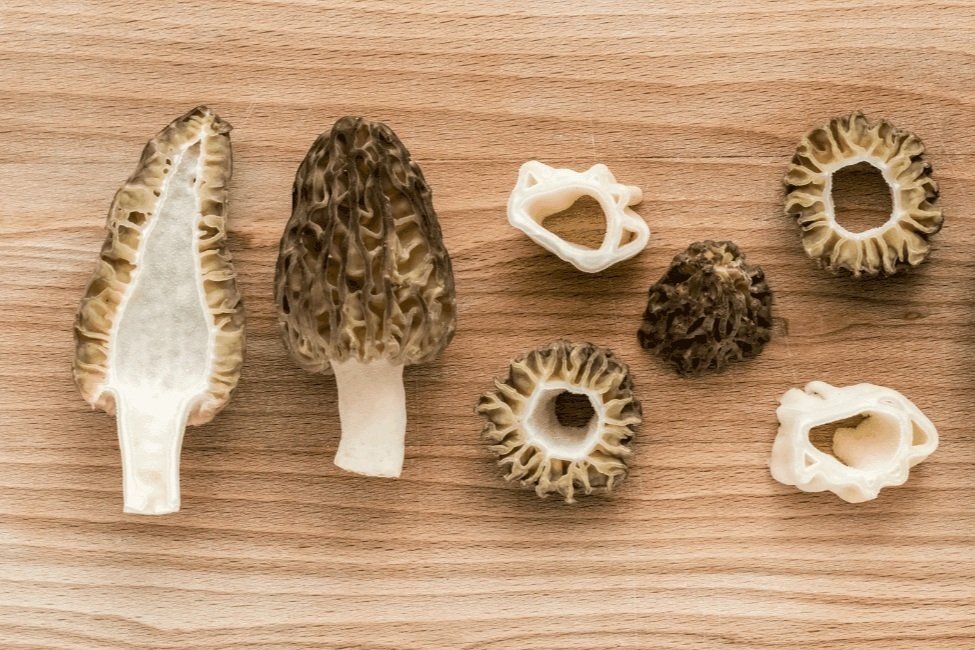
I made the guide completely free and available on my website because education should be accessible. In addition, I maintain a county-by-county morel mushroom map that is updated in real time as reports come in from across Oklahoma. As morels are found in different counties, the map reflects those updates so foragers can better understand regional fruiting patterns. These tools are designed to empower people with accurate, local information rather than guesswork. Safe foraging begins with education, and education builds responsible outdoor communities.
A Milestone for Oklahoma’s Heritage
The movement to designate the morel as Oklahoma’s official state mushroom represents more than a symbolic change in statute. It reflects years of growing public enthusiasm, sustained education, and meaningful legislative progress. From the passage of SB 447 expanding responsible foraging access to the advancement of HB 3263 recognizing cultural significance, Oklahoma is steadily embracing its fungal heritage. This is what progress looks like: education leading to awareness, awareness leading to policy, and policy reflecting the values of the people.
The morel has long been part of our forests, our kitchens, and our spring traditions. Now, we have the opportunity to formally recognize it as part of our state identity. With continued engagement and community support, we can ensure that Oklahoma’s appreciation for mushrooms continues to grow — not just seasonally, but permanently.
