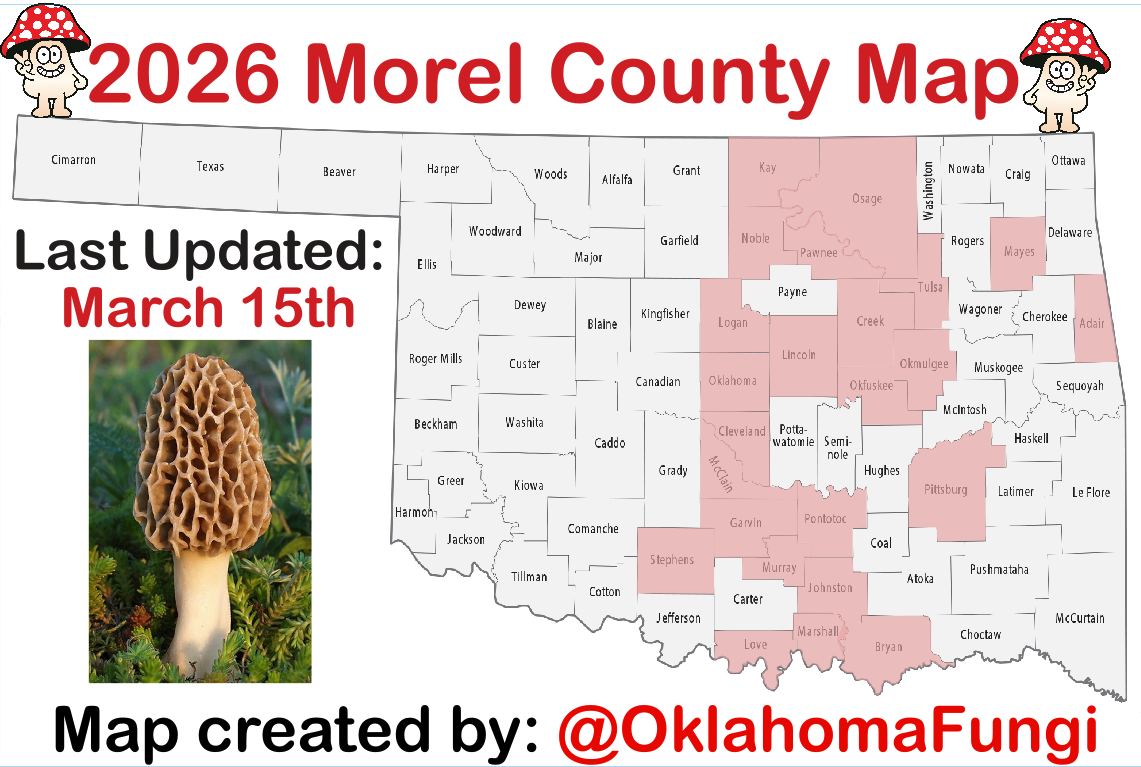
Oklahoma’s 2026 Morel Mushroom Foraging Season Has Ended!
General Morel Mushroom Info

Local Media Highlights
“Oklahoma Moves to Make Morel Mushroom State Mushroom”
By National Today on March 12th, 2026
“Bill Making Morel the State Mushroom Passes First Committee”
By Ponca City Now on February 25th, 2026

“Wanting to forage for mushrooms? Bill would allow it on state lands.”
By Jordan G. from The Oklahoman on March 7th, 2025

“2024 Morel Mushroom Season”
By KGOU on March 19th, 2024

“More foraging fun: Why this Oklahoma group is going wild for morel mushrooms”
By Carla H. from The Oklahoman on April 16th, 2023

“Hunting for morels? Here's what you should know before you go fungi foraging”
By Carla H. from The Oklahoman on April 16th, 2023

“Jacob DeVecchio with The Oklahoma Fungi Company forages for Yellow Morels in Edmond”
By Nathan F. from The Oklahoman on April 14th, 2023
“Morel Mushroom Education”
By PBS on April 8th, 2023
“Has the heat withered Oklahoma's morel foraging season?”
By The Oklahoman on April 5th, 2026
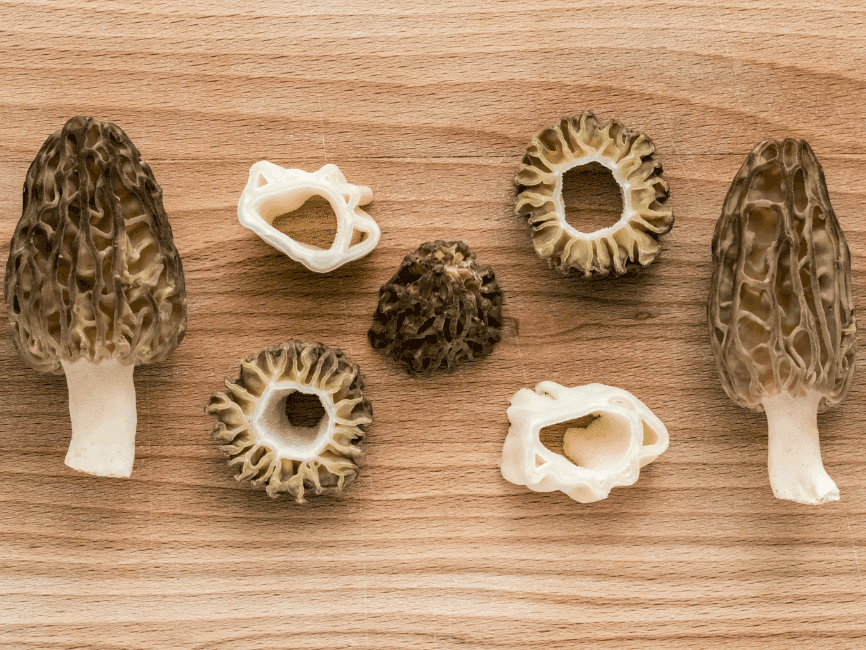
“The Morel of the Story”
By Oklahoma Magazine on March 24th, 2026
“House votes yes on morel as state mushroom, with ‘David Beyer Act’
By Colleen Wilson on March 17th, 2026
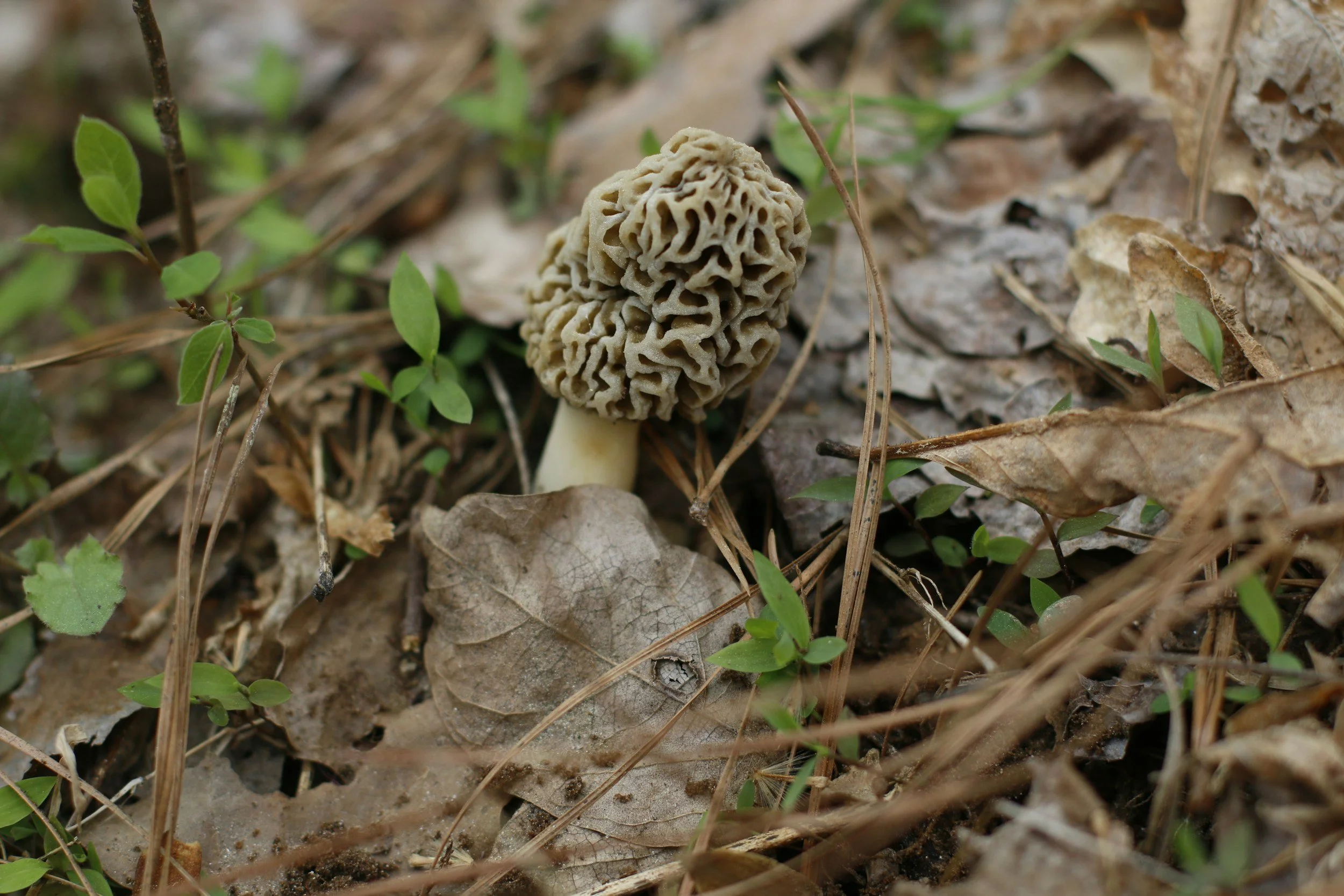
“Morel One Step Closer to State Mushroom Status”
By OK House on March 16th, 2026
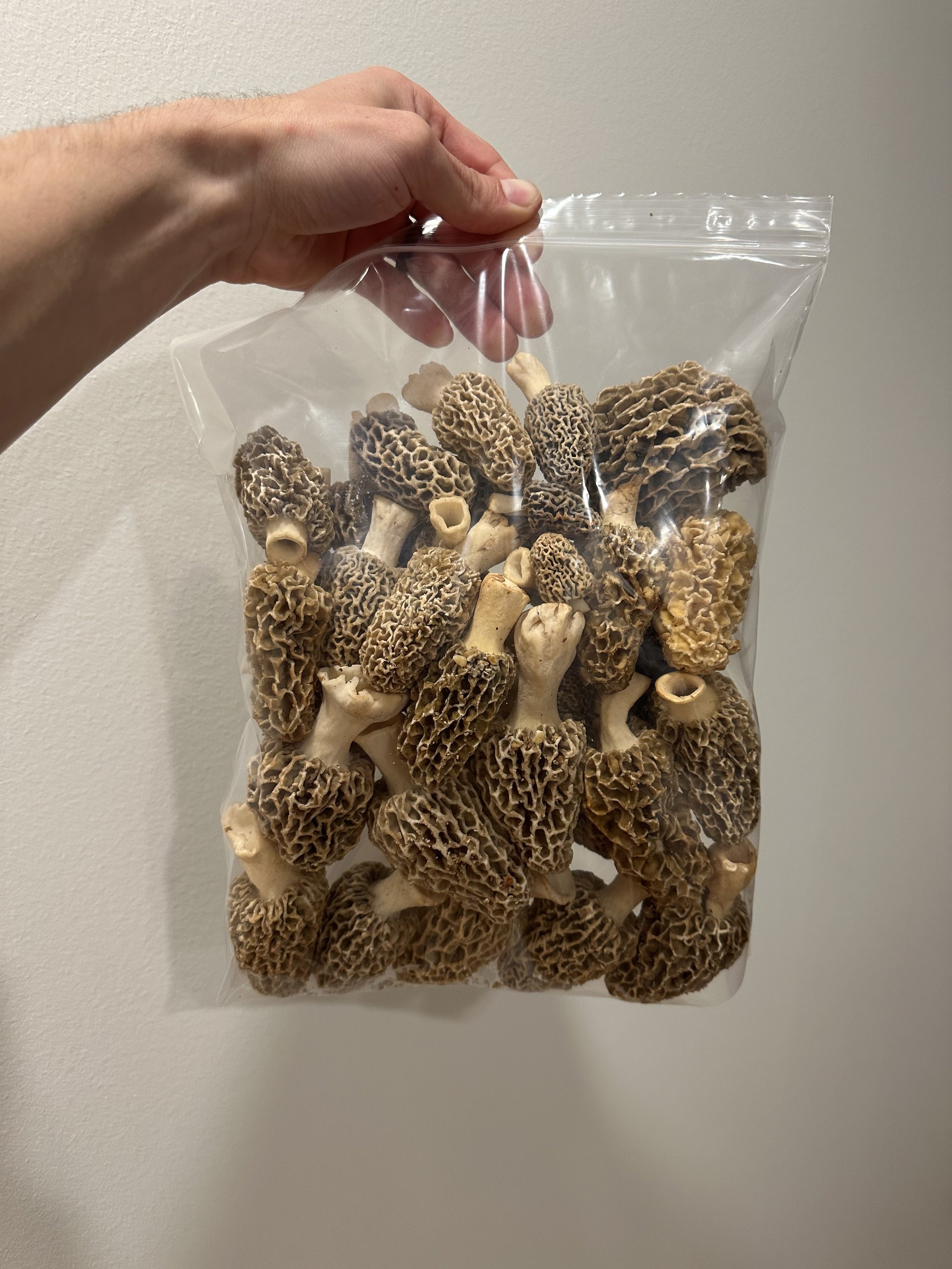
“Oklahoma lawmaker pushes to crown the prized morel as the state mushroom”
By Colleen Wilson from KOKH on February 12th, 2026
“Morel Mushroom Foraging”
By Daniel Farris from Oklahoma Gardening on April 7th, 2023

Do you need help with Morel Mushroom identification?
Complete the form below and email me some photos!
OklahomaFungi@gmail.com
Tips when sending in photos:
Take a clear image of the mushroom undisturbed in its natural habitat.
Take a close-up photo of the spore-bearing surface (typically the underside).
Take a photo of the entire mushroom, ensuring the base is visible.
Take a clear image of the mushroom cap.
Take a clear cross-sectional image of the mushroom (cut it in half).
Take notes on any staining or bruising that occurs when the mushroom is damaged and include that information with your submission.